There's a particular kind of difficulty that doesn't announce itself loudly. It doesn't come from failure. It comes from doing the work with everything you have and watching the world measure it with the wrong ruler.
Martin Scorsese has spent six decades making films that are studied in universities, quoted by filmmakers across generations, and considered among the greatest works of cinema ever produced. He is, by almost any artistic standard, one of the greatest directors alive. And yet, for most of his career, the box office has treated him like a mid-tier contender.
Consider the evidence.
1990. Goodfellas is released — a film so precise in its construction, so electric in its performances, so confident in its moral vision that it essentially rewrote the grammar of the crime genre. It grossed approximately $46 million domestically. That same year, Home Alone made $285 million. Nobody is arguing that Home Alone is a better film. But the market didn't care about that argument.
2002. Scorsese releases Gangs of New York — a brutal, operatic excavation of American identity, violence, and mythmaking. $77 million at the domestic box office. Spider-Man opened the same year and made $403 million. Again, no serious person claims artistic equivalence. But the numbers don't reflect that.
2016. Silence — perhaps Scorsese's most personal film, a decades-long passion project about faith, doubt, and what it costs to hold onto belief under unbearable pressure. It earned roughly $7 million in limited release. Rogue One: A Star Wars Story, released the same month, made $532 million. One of these films will be discussed in 50 years. The other will be a footnote in franchise history.
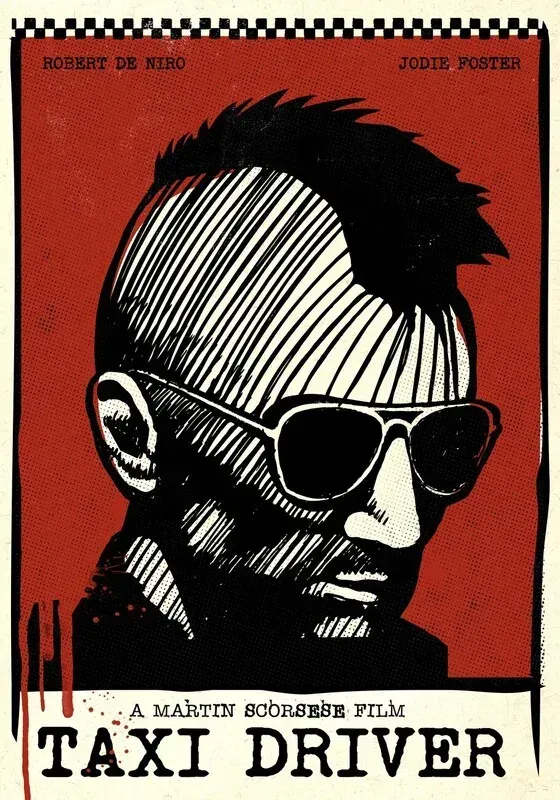
The pattern is not accidental. It is structural. The market optimizes for accessibility, familiarity, and spectacle. Scorsese optimizes for truth, complexity, and craft. These are not the same optimization problem and pretending they are is how you end up believing that Transformers and Taxi Driver are playing the same game.
"The most personal is the most creative."
— Martin Scorsese
It's a deceptively simple line. But read it in the context of his career and it becomes almost confrontational. He wasn't talking about diary entries and self-indulgence. He was talking about the refusal to make something generic the insistence that real creative work has to come from somewhere true in you, even when the market has no mechanism to reward that truth.
The Corporate Parallel
The corporate world has the same problem.
We have constructed elaborate systems performance reviews, town halls, promotion committees, stakeholder management playbooks — that are, in theory, designed to identify and elevate talent. But what they actually do is reward a very specific kind of performance. Not the performance of doing excellent work. The performance of being seen doing excellent work in the language the institution has already decided counts.
In meetings, there is a vocabulary of advancement. You signal alignment. You demonstrate strategic awareness. You make the room feel confident. You build the right alliances. You speak the dialect of whoever holds the budget. None of this is inherently dishonest yet none of it is the work either. It is the box office number. It is the metric that the system agreed to measure, independent of whether it captures what actually matters.
The person who sits in the meeting and says the uncomfortable true thing the one who names the flaw in the plan, who refuses to dress up a bad decision in good PowerPoint, who insists the organization confront something it would rather defer, that person is doing the Scorsese move. And like Scorsese, they will often watch a shinier, more crowd-pleasing alternative walk away with the bigger number.
The Deeper Question: What is Sucess?
This is where the Scorsese analogy gets genuinely useful, because Scorsese never stopped making films. He didn't chase the box office. He didn't pivot to franchise filmmaking when the industry consolidated around IP. He made The Age of Innocence when nobody asked for it. He made Silence when every studio passed. He made The Irishman as a three-and-a-half-hour meditation on regret and went to Netflix because that's where the space existed.
The question isn't whether Goodfellas should have outgrossed Home Alone. The question is: what were you actually trying to make?
In the corporate world, this translates directly. What are you actually trying to do? Are you trying to build a career defined by advancement metrics — titles, compensation bands, visibility with senior leadership? Or are you trying to build something that works? Something that holds up? Something that the people closest to the work will point to years later and say: that was done right?
These paths are not always incompatible. But they diverge more often than anyone in a town hall will admit.
The Cost of Craft
What makes it difficult to be Martin Scorsese isn't lack of talent. It's that his standards are not calibrated to the reward system. He cannot make a film he doesn't believe in and call it good. That rigidity: which is also his greatness and that could mean that he will perpetually be misread by systems built to count tickets.
The same is true of people in organizations who are wired this way. Their internal standard of quality doesn't flex to match what the institution is measuring. They will flag the risk everyone else is papering over. They will slow down the process to do it properly. They will say in the retrospective what should have been said in the kickoff.
And they will, at various points, watch a flashier colleague, a smoother communicator, a better box office performer, move past them.
This is not a call to martyrdom. Scorsese learned, over time, how to find his audience, protect his creative space, and work within systems without being consumed by them. That is also a skill. The goal is not to be only principled at the cost of all effectiveness it is to be clear-eyed about what you are actually optimizing for, and honest about the gap between the metric and the thing the metric is supposed to represent.
The Question Worth Asking
The next time you prepare for a big meeting, before you rehearse what will land well, before you calibrate the ask to what the room is ready to hear...ask yourself one question:
If nobody was watching the box office, what would I actually say?
That answer is your craft. What you do with it is your career.